
The problem with mortar
For decades, ridge tiles were bedded on sand-and-cement mortar, and gable verges were pointed the same way. It looks fine on day one. Then seasons of frost, heat and vibration crack it, rain washes it out, and one windy night a ridge tile ends up in the garden — or worse, on a car or conservatory. Repointing buys a few years at best, because new mortar on old is already a compromise.
Modern British Standards for slating and tiling (BS 5534) require ridge and hip tiles to be mechanically fixed — mortar alone is no longer considered enough. Dry-fix is how a roof is supposed to be finished now.
What we fit, and why it lasts
A dry ridge system fixes each ridge tile with stainless clamps and screws over a ventilated roll-out membrane along the ridge line. It resists wind uplift, sheds water, and quietly vents moist air from the loft — helping prevent condensation and timber decay. Dry verge units cap and lock the gable edge tile-by-tile, giving a clean, straight line that can't crack or drop out.
Fitted as part of every new roof and re-roof we build, dry systems can also be retrofitted: if your tiles are sound but the mortar is shot, we strip the ridge and verges, make good, and re-fix dry. The result is a sharper-looking roofline and one less maintenance job for the life of the roof.
Recent dry ridge & verge systems work
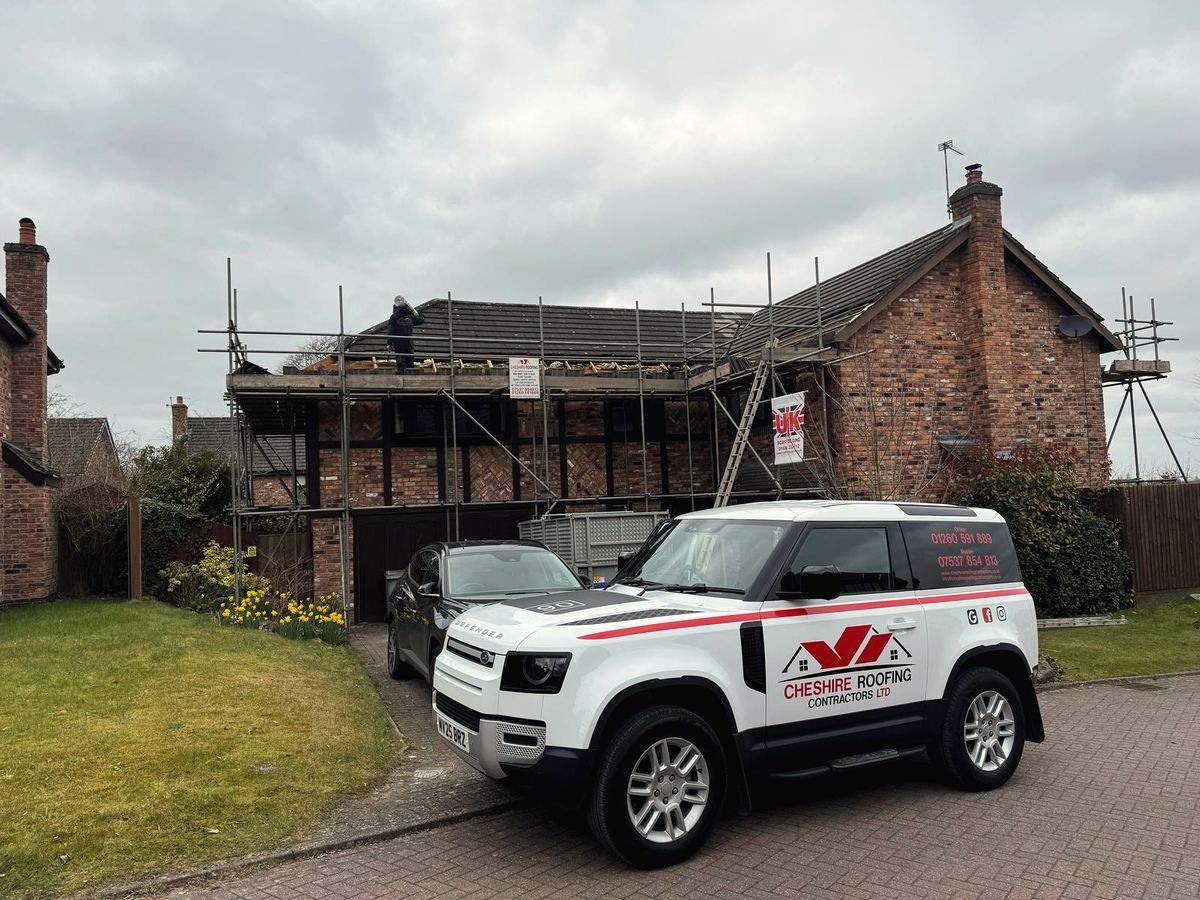
Photographed on our own jobs across Cheshire — see the full gallery on Our Work.